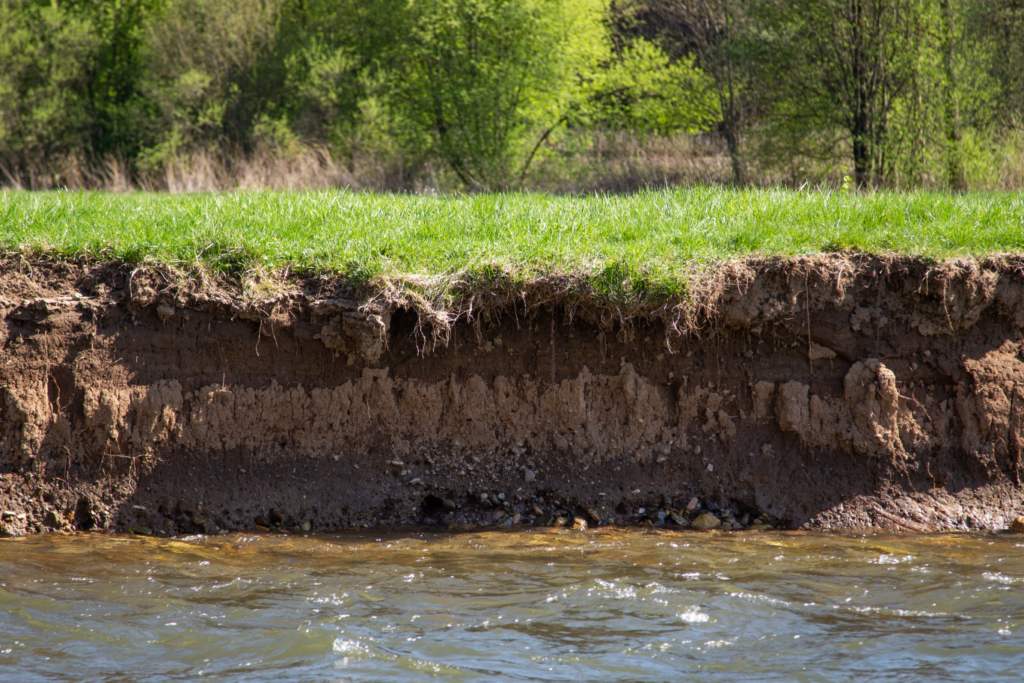
Erosion can affect lakefront property value because it may reduce usable land, create shoreline instability, raise repair concerns, limit water access, and make buyers worry about future costs. A lakefront home with a stable, well-maintained shoreline usually gives buyers more confidence. A property with visible washout, collapsing banks, exposed roots, drainage cuts, or failing shoreline protection may be viewed as riskier, even if the house itself is in good condition.
For lakefront homeowners, erosion is not just a cosmetic issue. It can change how the property feels, how the land functions, and how buyers compare it to other lake homes. In an appraisal, erosion may be considered because it can affect marketability, site utility, safety, maintenance expectations, and the property’s overall appeal.
Buyers may love the idea of owning lakefront property, but they usually do not want to inherit an expensive problem.
When they see erosion, they may immediately wonder how serious it is. They may not know whether it is minor, active, long-term, or expensive to correct. That uncertainty alone can affect how they feel about the property.
A buyer may ask:
Is the shoreline still stable?
Will the erosion keep getting worse?
Could it affect the yard, dock, driveway, foundation, or outdoor living areas?
How much would it cost to fix?
Will repairs require approvals or permits?
Will the next owner have ongoing maintenance problems?
Even if the seller believes the erosion is manageable, buyers may see it differently. In real estate, buyer confidence matters. Erosion can reduce that confidence.

Sometimes the biggest issue is not just the visible soil loss. It is what the erosion suggests.
Erosion may make buyers wonder about drainage, stormwater runoff, shoreline maintenance, water movement, slope stability, or previous neglect. If the problem looks active, buyers may become cautious because they do not know where it stops.
A small area of erosion may be one thing. A washed-out bank or failing shoreline structure may feel like a much larger concern.
That matters in an appraisal because value is influenced by how the market responds. If buyers see the property as needing work, taking on risk, or requiring future investment, that can affect what they are willing to pay.
Lakefront land is valuable because of how it can be used.
Buyers often want space for outdoor seating, walking to the water, fishing, lake equipment, family gatherings, or access to a dock. Erosion can reduce the amount of land that feels usable.
A yard that slopes gently to the water may feel inviting. A yard with washed-out areas, steep drop-offs, or unstable soil may feel limited.
That can affect the lakefront experience.
The buyer is not just asking, “How much land is on the deed?” They are asking, “How much of this land can I actually enjoy?”
If erosion makes part of the property difficult, unsafe, or unpleasant to use, that can reduce market appeal.
Water access is one of the most important features of a lakefront property.
If erosion damages the path to the lake, weakens steps, affects the bank, or makes the shoreline slippery or unstable, the property may not feel as usable. A buyer may still enjoy the view, but the lake itself may feel harder to reach.
This is important because many lakefront buyers want more than scenery. They may want to fish, boat, kayak, swim, sit near the water, or use a dock.
If erosion limits those uses, the value can be affected.
A lake home with safe, easy access to the water may compete differently than one where the buyer has to think about repairs before enjoying the shoreline.

Erosion near a dock can be especially concerning.
A dock may be a strong selling feature, but if the surrounding bank is washing away or access to the dock is unstable, buyers may question the condition and usefulness of the entire lakefront setup.
They may wonder whether the dock is properly supported, whether the walkway is safe, or whether the shoreline will need stabilization before the dock can be fully enjoyed.
A dock is most valuable when it is functional, accessible, and supported by a usable shoreline. If erosion makes the dock area feel unsafe or unfinished, the dock may not help the property as much as the seller expects.
Lakefront homes often depend heavily on outdoor living.
Decks, patios, fire pits, screened porches, shoreline seating, and lake-facing yards can all help buyers imagine life at the property. Erosion can interfere with that experience.
A buyer may hesitate if the outdoor area feels unstable or incomplete. If the best view overlooks a washed-out bank, or the path to the water looks unsafe, the emotional appeal of the property may be weakened.
This matters because lakefront purchases are often emotional. Buyers want to picture peaceful mornings, family weekends, fishing, boating, and relaxing near the water. Erosion can interrupt that picture and replace it with questions about repairs.
First impressions are powerful.
A lakefront home may show beautifully inside, but once buyers walk outside, the shoreline can change their opinion quickly. If they see exposed roots, soil loss, collapsed areas, or water cutting through the yard, they may start focusing on problems instead of benefits.
That shift can affect negotiations.
Instead of thinking about the view, the dock, or the setting, the buyer may start mentally subtracting repair costs. Even if the house is priced fairly, visible erosion can become a reason for a lower offer or a request for concessions.
This does not mean every erosion issue destroys value. It means the issue should be understood before listing, pricing, or negotiating.
Some erosion is mainly cosmetic. Other erosion may create safety concerns.
Steep drop-offs, loose soil, unstable banks, broken steps, washed-out paths, or failing retaining walls can make buyers think about liability and personal safety.
This is especially important for buyers with children, grandchildren, older family members, guests, or pets. A shoreline that feels unsafe may reduce the buyer pool.
The property may still be valuable, but fewer buyers may be willing to take on the concern. A smaller buyer pool can affect marketability, and marketability can affect value.

Some lakefront properties have shoreline protection such as riprap, retaining walls, seawalls, vegetation, drainage improvements, or other stabilization methods.
These features can support value when they are functioning well and appear maintained. They may help buyers feel that the shoreline is protected and easier to manage.
But shoreline protection can also become a problem if it appears to be failing.
Cracked walls, leaning sections, missing stone, washed-out soil behind a wall, clogged drainage, or poorly repaired areas can raise concerns. A feature that should provide confidence may instead make buyers worry about expensive repairs.
The appraiser will look at the condition and market reaction, not simply the fact that shoreline protection exists.
Erosion often affects value because buyers think about repair costs.
A buyer may not know the exact cost to fix the issue, but uncertainty can still affect their offer. If the problem looks expensive, buyers may lower their price, ask for credits, request repairs, or avoid the property altogether.
In some cases, a seller may already have estimates or professional opinions about the erosion. That information may help reduce uncertainty, but it does not automatically eliminate buyer concern.
The more serious the issue appears, the more likely it is to influence negotiation.

Shoreline repairs may not always be simple. Depending on the property, the lake, and local requirements, erosion control work may involve rules, approvals, permits, or restrictions.
I cannot verify which rules apply to a specific lakefront property without reviewing the property location and applicable requirements. But from a buyer’s perspective, the possibility of approvals can make erosion feel more complicated than an ordinary yard repair.
That uncertainty can affect value because buyers may not want to take on a problem they do not fully understand.
For sellers, this is one reason it can be helpful to gather accurate information before listing. If the issue is minor, explainable, or already addressed, that may help reduce buyer concern.
In an appraisal, comparable sales matter. But with lakefront property, the comparable sales need to be truly comparable.
A lakefront home with a stable shoreline may not compare directly to a property with visible erosion. If one property has easy lake access and another has shoreline damage, buyers may not treat them equally.
An appraiser may look at whether similar properties with erosion or shoreline issues sold for less, took longer to sell, or required adjustments in the valuation analysis.
The key question is how the market reacts.
If buyers in the area strongly prefer stable, usable shoreline, erosion may have a more noticeable impact. If the issue is minor and common for the area, the effect may be smaller. The property has to be evaluated in context.
Not always.
Some erosion problems should be addressed before listing, especially if they create safety concerns, obvious instability, or major buyer hesitation. Other issues may be better handled by understanding the property’s as-is value and pricing accordingly.
Before making repairs, sellers should consider:
Is the erosion minor or serious?
Is it active or old damage?
Does it affect access to the water?
Does it affect the dock, steps, yard, or structures?
Will repairs require approval?
Will the cost likely be recovered in the sale?
Would a buyer prefer to handle the work themselves?
A pre-listing appraisal can help a seller understand how the erosion may affect value before spending money on repairs.
Not every erosion-related improvement has to be large.
Sometimes basic maintenance can improve how the shoreline presents. Clearing debris, keeping access paths visible, managing drainage, repairing small washouts, trimming carefully, and making the lake access safer may help buyers see the property more clearly.
The goal is not to hide a problem. The goal is to present the property honestly and reduce unnecessary concern.
A buyer should be able to understand the shoreline without feeling like they are discovering a neglected issue.
One of the worst things a seller can do is pretend erosion does not matter.
Buyers will notice. Inspectors may notice. Agents may mention it. Appraisers may consider it. If the issue is visible, it is likely to become part of the conversation.
Ignoring erosion does not make it disappear. It usually just moves the issue into negotiation, where the buyer may use it to ask for a lower price.
A better approach is to understand the issue before listing. Know whether it is minor, serious, repairable, common for the area, or likely to affect marketability.
Erosion does not automatically mean a lakefront property has low value. Many lakefront homes with shoreline concerns still have strong appeal because of the view, location, home condition, dock, privacy, or overall setting.
The question is how much the erosion matters in the context of the whole property.
An appraisal helps put that issue into perspective. The appraiser considers the home, land, shoreline, water access, dock, view, condition, and comparable sales. That broader view can help the owner understand whether erosion is a minor concern, a major value issue, or something in between.
Erosion affects lakefront property value because it changes how buyers see risk, usability, maintenance, safety, and future cost. A stable shoreline helps buyers focus on the benefits of the lake. An eroding shoreline can make them focus on uncertainty.
For sellers, the most important step is to understand the issue before making pricing or repair decisions.
Carolina Appraisal Group helps lakefront property owners evaluate how shoreline erosion and other lake-specific features may affect value. If you are preparing to sell, refinance, settle an estate, or make decisions about your lake property, an appraisal can help you understand the property more clearly before you move forward.
Disclaimer:
All information provided on this website is for general informational purposes only and does not constitute legal, financial, or professional advice. Carolina Appraisal Group does not guarantee the accuracy, completeness, or reliability of any information provided. Appraisals and valuations are subject to change based on market conditions and specific property factors. Clients should consult with one of our qualified professionals before making decisions based on the information provided herein.Use of this website and submission of information does not establish a client relationship. All services are subject to formal engagement agreements and compliance with applicable federal, state, and local laws.
© 2025 Carolina Appraisal Group™. All rights reserved. | Privacy Policy | Terms of Service
Orangeburg, SC | Serving the Eastern Coastal Region & Beyond
Phone: (803) 534-5554 | Email: info@carolinaappraisalgroup.com
WEIC One Client Management System & Website Provided by 🚀 Weatherford Internet Consulting


